
Rational decision making - The benchmark for making effective decisions
Rational decision making brings a structured or reasonable thought process to the act of deciding. The choice to decide rationally makes it possible to support the decision maker by making the knowledge involved with the choice open and specific. This can be very important when making high value decisions that can benefit from the help of tools, processes, or the knowledge of experts.
Characteristics of rational decision making

Choosing rationally is often characterized by the following:
- Decision making will follow a process or orderly path from problem to solution.
- There is a single best or optimal outcome. Rational decisions seek to optimize or maximize utility.
- The chosen solution will be in agreement with the preferences and beliefs of the decision maker.
- The rational choice will satisfy conditions of logical consistency and deductive completeness.
- Decision making will be objective, unbiased and based on facts.
- Information is gathered for analysis during the decision making process.
- Future consequences are considered for each decision alternative.
- Structured questions are used to promote a broad and deep analysis of the situation or problem requiring a solution.
- Risk and uncertainty are addressed with mathematically sound approaches.
In the ideal case, all rational decision makers would come to the same conclusion when presented with the same set of sufficient information for the decision being made. This would suggest that collaborative decision making will often employ a rational decision making process.
Problems and limitations with choosing rationally
Most of the issues and limitations associated with rational choice result from falling short of the ideal proscribed in the full rational decision making model. Here are three areas that generate much of the concern.
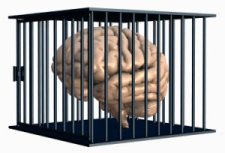 Limits of human capabilities - The limits on our human ability to gather, process, and understand all the information needed to optimize a decision outcome make it impractical to meet the ideal except in very constrained or simple situations. We have limits in our ability to formulate as well as solve very complex problems. Our desire to optimize is also limited, and we will usually "saticfice", or be content with acceptable solutions when confronted with obstacles.
- Limits on information and knowledge - The model assumes we should or can gather sufficient information in terms of quantity, quality, accuracy, and integrity. It also assumes that we have access to the required knowledge of the cause and effect relationships that are important to the evaluation of alternative solutions, particularly with respect to projecting future consequences.
- Limits in time - Search for the optimum solution will generate a delay that could negatively impact the benefits of the chosen alternative. In essence, if the decision alternatives are not properly discounted for changes due to decision timing, the chosen alternative may not be optimum.
More on decision making models
As with any ideal, additional models have been developed to address the problems with realizing the full rational model. The Bounded Rationality model acknowledges our cognitive and environmental limits and suggests that we act rationally within these constraints. Many decision making theories are a result of looking at the consequences of bounded rationality.
Rational ignorance takes a similar approach to looking at the cost of gathering information. In this model, it is suggested that if the cost to acquire information exceeds the benefits that can be derived from the information, it is rational to remain ignorant. This aligns with our concept of using decision value to limit the decision effort, ensuring an appropriate return from using a rational decision making process (See planning decision making).
The benefits of rational choice
Within the limitations described above, choosing rationally can provide a number of benefits that include:
- Addressing complex decisions by breaking them down
- Characterizing decision problems and goals to ensure addressing all needs and desires
- Being aided by structured techniques, mathematics, and computers
- Ongoing improvement when codified in a process, procedure, or program
- A long list of decision making techniques and tools with proven usefulness
- A growing capability to analyze and access the information that can improve guidance based on the facts
While unable to meet the requirements of the full rational decision making model, this ideal serves as a valuable approximation that supports predictions and decision making with increasingly broad application. Rational approaches continue to provide the standard for effective decision making when considered in light of current limitations. Coping with complexity and information overload will place greater demand on enhancing capabilities that support rational choice.

Return from Rational Decision Making to Decision Making Styles
- Decision Innovation
- info@decisioninnovation.com
Follow Us


